Winter in the classroom has a very specific kind of energy.
Your students are back from break, routines feel shaky, attention spans are shorter, and everyone is adjusting to being inside a lot more than usual. You’re expected to pick up right where you left off academically—while also reteaching expectations, managing winter wiggles, and filling the gaps that seem to resurface overnight.
And let’s be honest:
You don’t have time to constantly explain centers, reteach directions, or reinvent your plans every week.
That’s why winter centers need to work differently than they do in September or October. The goal isn’t flashy activities or complicated rotations—it’s low-prep, repeatable centers that students can manage independently, even when energy is high and focus is low.
In this post, I’ll share:
- Why winter centers feel harder than other seasons
- What actually makes a winter center “low prep”
- Easy winter math and literacy centers for 1st grade (with K–2 flexibility)
- Practical ways to manage centers without losing your mind
- How to make winter centers last all season long
Why Winter Centers Feel Harder Than Other Seasons
If centers feel more challenging in winter, it’s not your imagination.
Post-Break Behaviors
Students return from winter break needing reminders about:
- Voice levels
- Transitions
- Staying on task
- Working independently
Even kids who were doing great in December may struggle at first.
Indoor Recess & Weather Disruptions
Cold temperatures, snow days, and indoor recess mean:
- Less movement
- More pent-up energy
- Shorter attention spans
Centers that require a lot of explanation or close monitoring tend to fall apart quickly during this time of year.
Skill Gaps Resurfacing
Winter is often when you notice:
- Addition and subtraction facts slipping
- Writing stamina decreasing
- Students needing more review than expected
That’s why winter centers need to reinforce core skills—not introduce something brand new that requires constant reteaching.
What Makes a Winter Center Truly “Low-Prep”
Not all “easy” centers are actually easy—especially in January.
A true low prep center has a few non-negotiables:
1. Print-and-Go Materials
If it requires:
- Cutting
- Laminating
- Assembling
- Explaining new rules every time
…it’s not low prep in winter.
Print-and-go centers let you prep once and reuse often.
2. Student Independence
The best winter centers:
- Look familiar
- Follow predictable formats
- Don’t require adult support to get started
Students should be able to walk to the center, recognize the task, and begin working right away.
3. Clear, Repeatable Routines
Winter centers work best when:
- The structure stays the same
- Only the content changes
- Expectations are consistent
This reduces behavior issues and increases time on task.
Winter Math Centers for 1st Grade (No-Prep Options)
Math centers are often the first thing to unravel in winter—especially when energy is high and focus is low.
The key is to stick with easy winter math activities for 1st grade that reinforce skills students already know.
Focus on Addition & Subtraction Review
Winter is the perfect time to spiral:
- Addition within 10 and 20
- Subtraction strategies
- Number relationships
Instead of introducing new formats, use hands-on worksheets and familiar layouts students can complete independently.
Effective Winter Math Center Ideas:
- Addition and subtraction printables
- Fact practice pages students already recognize
Math review that feels manageable, not overwhelming
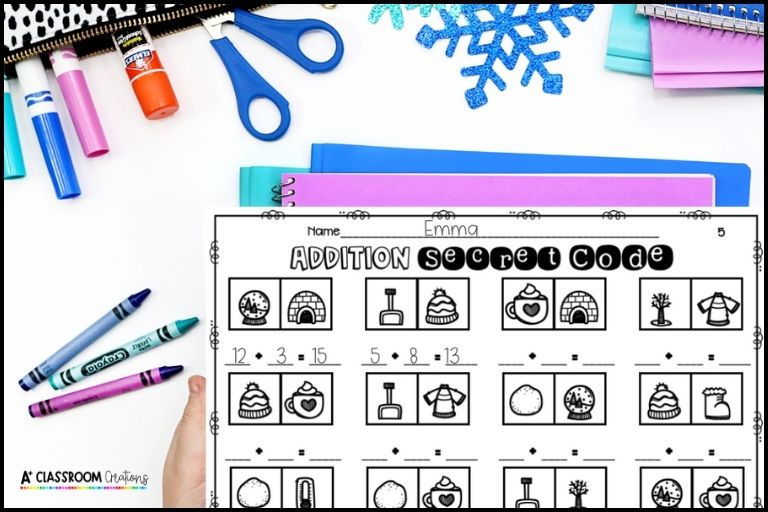
Check out this Secret Code activity HERE!
Why Worksheets Can Be a Good Thing in Winter
In January, worksheets:
- Reduce confusion
- Increase independence
- Provide quiet focus time
When used intentionally, they become reliable winter math centers that students can complete without constant direction.
Teacher Tip:
Winter math centers should feel familiar. Save new math games for spring when stamina and focus are stronger.
Ready-to-Go Option
If you want something already planned, the Winter Learning Bundle includes winter math printables focused on addition and subtraction—perfect for centers, morning work, or small groups without extra prep.
Winter Literacy Centers That Build Real Skills
Literacy centers in winter should do two things:
- Reinforce essential skills
- Be easy for students to manage independently
Reading & Sentence Work
Winter literacy centers don’t need to be elaborate to be effective.
Simple activities like:
- Reading short passages
- Building sentences
- Practicing grammar and spelling
can go a long way—especially when the format stays consistent.
Sentence Building Centers
Sentence work is ideal for winter because it:
- Supports writing development
- Reinforces grammar and structure
- Allows for differentiation
Students can cut, build, write, or rewrite sentences using familiar routines.
Writing Extensions Without the Overwhelm
Winter writing centers work best when prompts are:
- Clear
- Short
- Purposeful
Creative winter themes give students a focus while keeping expectations manageable.
Teacher Tip:
In winter, shorter writing tasks done consistently are more effective than long writing assignments that lead to frustration.
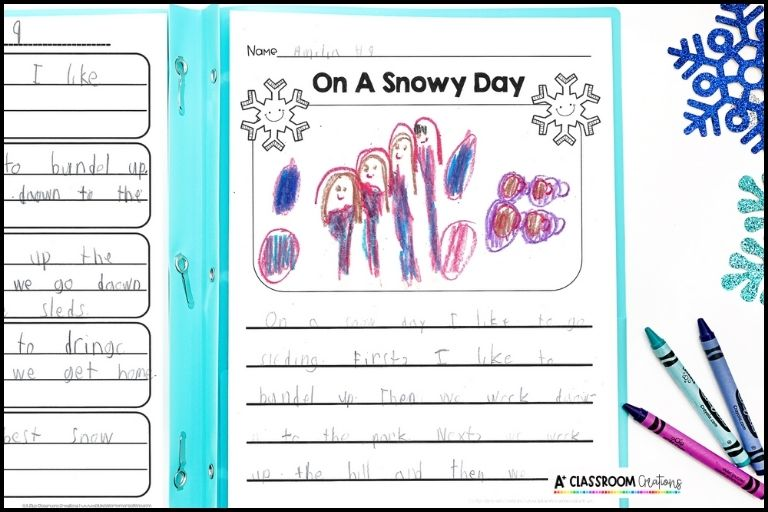
Take a closer look at this resource HERE
Ready-to-Go Literacy Support
The Winter Learning Bundle includes:
- Grammar and sentence writing activities
- Spelling practice
- Winter-themed writing prompts
If you want something ready to go without planning from scratch, it’s a solid option for winter literacy centers.
How to Manage Winter Centers Without Losing Your Mind
Even the best centers can fall apart without a plan—especially in winter.
Keep Center Rotations Simple
This is not the time of year to:
- Add extra rotations
- Change groupings weekly
- Introduce complicated schedules
Stick to what students already know.
Winter-Friendly Rotation Tips:
- Fewer rotations per day
- Longer time at each center
- Predictable order
Plan for Early Finishers
Early finishers can derail a center fast.
Have:
- A basket of independent printables
- Writing prompts
- Math review pages
ready to go.
Teacher Tip:
If students know exactly what to do when they finish, you’ll spend far less time redirecting behavior.
Reinforce Expectations Often
Short reminders go a long way in winter:
- Model expectations again
- Practice transitions
Praise independence.
Make Winter Centers Work All Season Long
The best winter centers aren’t used once—they’re reused and adapted.
Reuse Materials in Different Ways
The same printable can be:
- A center activity
- Morning work
- Homework
- Small group practice
This saves time and keeps routines consistent.
Built-In Differentiation
Winter centers should allow you to:
- Assign different pages to different groups
- Adjust expectations without changing the activity
- Meet students where they are
Emergency Sub Plans
Winter weather means unexpected absences.
Print-and-go winter centers:
- Are easy to explain
- Don’t require special materials
Keep learning moving even when you’re out
Final Thoughts: Keep Winter Simple
Winter doesn’t need to be chaotic.
When you choose:
- Low prep centers
- Familiar routines
- Print-and-go activities
you give yourself—and your students—the structure needed to stay focused and successful during the longest stretch of the school year.
If you want something ready to use without spending your weekend planning, the Winter Learning Bundle was designed with winter realities in mind.
Grab the Winter Learning Activities Packet Here
Print, prep once, and reuse all season long—so your winter centers can practically run themselves.
Looking for more Winter ideas? Check out my favorite read-alouds HERE!